Process · 6 September 2026 · 8 min read
How long does it take to build a business website?
A standard business website takes two to four weeks from content handover to launch. An eCommerce store takes four to eight. The variable that decides where you land in those ranges is almost never development speed; it is how ready your content is.
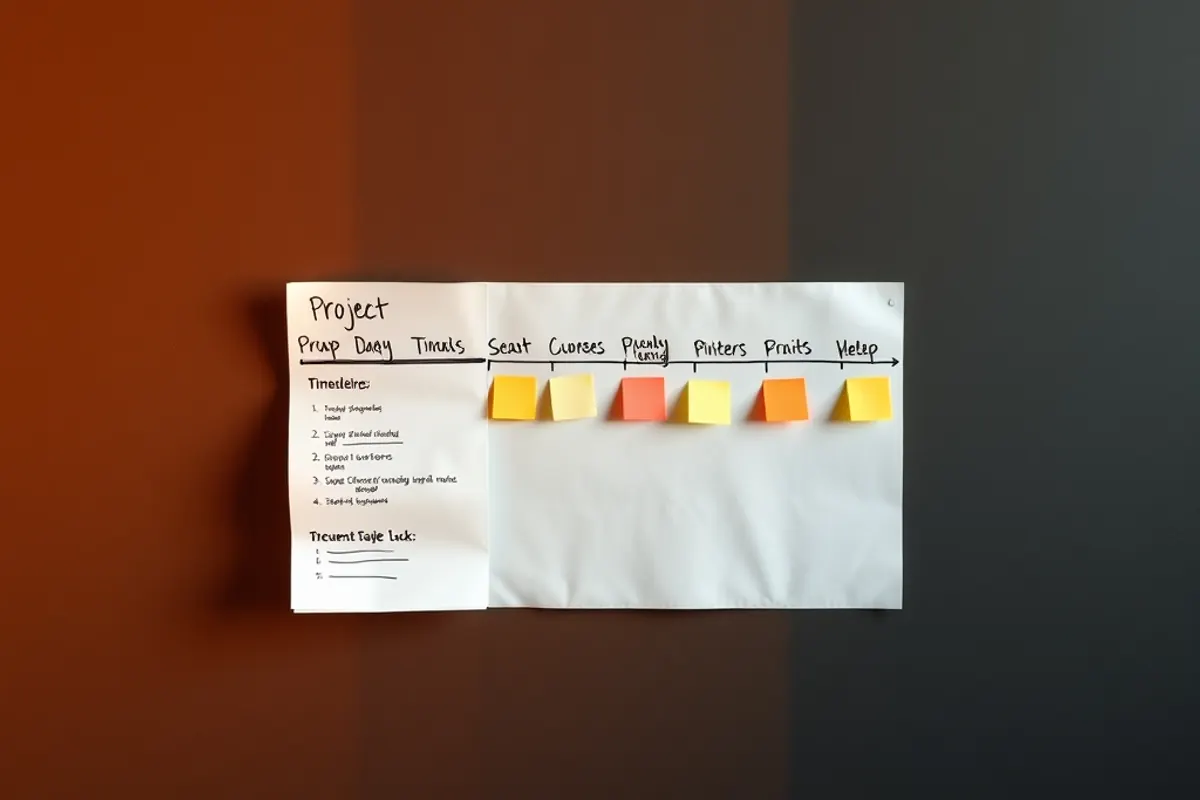
Timelines quoted at the proposal stage assume everything arrives on time. Since it usually does not, here is what the weeks actually contain, so you can see where your own project is likely to stall and prevent it.
Typical timelines by project type
| Project | Realistic timeline | Fastest sensible |
|---|---|---|
| Landing page | 3 - 7 days | 2 days |
| Business website, 5 - 10 pages | 2 - 3 weeks | 1 week |
| Business website, 10 - 25 pages | 3 - 5 weeks | 2 weeks |
| Website redesign, content exists | 2 - 4 weeks | 10 days |
| WooCommerce or Shopify store | 4 - 8 weeks | 3 weeks |
| Custom or headless build | 6 - 16 weeks | 4 weeks |
Week by week, a 5 to 10 page business site
Week 1: strategy, structure and design direction
We work out who the site is for, what a visitor has to be able to do, and which searches it needs to answer. That produces a sitemap and a page-by-page outline. In parallel, design direction: typography, colour, layout language. Nothing is built yet and this is the week that decides whether the rest goes smoothly.
You provide: logo files, brand colours if they exist, any existing content, and one round of feedback on the sitemap.
Week 2: design and build of the key pages
Homepage and the most important inner page get designed and built as real, working pages you can open on your phone, not as PDFs. You review those two, and once approved, they set the pattern for everything else.
You provide: final text for the homepage and top service pages, plus product or project photography.
Week 3: remaining pages, then testing
The rest of the pages get built against the approved pattern, which is fast. Then the unglamorous part: forms tested end to end, mobile layouts checked on real devices, speed tuned, page titles and descriptions written, schema markup added, analytics and Search Console connected.
You provide: remaining content and one consolidated round of change requests.
Launch, and the week after
Going live is a day, not a week: DNS, SSL, redirects from old URLs, sitemap submitted. What matters is the week after, watching Search Console for crawl errors, checking that enquiries are actually arriving, and fixing the small things that only real traffic reveals.
Where projects actually slip
- Content. By a distance the biggest cause. "We will send the About page text this week" is the sentence that adds a month to projects.
- Scattered feedback. Three people sending contradictory changes over five days costs more time than the changes themselves. Nominate one decision-maker.
- Scope added mid-build. A booking system requested in week three is a new project, not a tweak. Legitimate, but it moves the date.
- Photography. Waiting on a product shoot stalls eCommerce builds constantly. Book it before the build starts, not during.
- Third-party access. Domain registrar logins, old hosting credentials and payment gateway approvals often sit with someone who left. Chase these in week one.
How to genuinely compress a build
If you have to launch fast, these work, in order of effect:
- Have every word written before week one. Nothing else comes close.
- Cut the page count. Launch six strong pages now and add the rest later; a live site earning enquiries beats a perfect one in three months.
- Use a customised premium theme instead of a fully custom design. Saves a week or more, and for most SMBs the visitor cannot tell.
- Give feedback in one consolidated round with a named decision-maker.
- Buy stock photography rather than waiting for a shoot, then swap in real photos after launch.
What does not work: adding people to the build. A website is not parallelisable the way that assumes, and a rushed testing phase is where launch-day embarrassments come from.
What "done" should include
A launch is not finished until these are true, and any of them missing will cost you later: mobile tested on real devices, forms delivering to a real inbox, SSL active, old URLs redirected, page titles and descriptions written for every page, XML sitemap submitted, analytics and Search Console connected, and every credential handed to you.
That checklist is included in every build we do; see our web development service. If you want the budget side of this, our Ahmedabad price guide covers what each timeline typically costs.
Need a date you can plan around?
Send us your page list and your target launch date and we will tell you honestly whether it is achievable, and what we would cut to make it so. Tell us about your project or message +91 70436 70437 on WhatsApp.
FAQ
Quick answers
What is the single biggest cause of delay?
Content. In our experience the overwhelming majority of slipped website deadlines are waiting on text, logos, product photos or approvals from the client side, not on development. Agencies rarely say this out loud, so plan for it: have your content ready before the build starts.
Can a website be built in a week?
A one-page site or a campaign landing page, yes, if the content is ready and the design brief is simple. A full business website in a week means either a template filled in with placeholder-quality content, or somebody working nights and cutting the testing. It is possible; it is rarely the right trade.
How long does an eCommerce store take?
Four to eight weeks for a normal catalogue, longer if payments, shipping rules or GST invoicing are unusual. Product data is the hidden work: 200 products with clean titles, descriptions, images and variants take real time to prepare, whoever does it.
Do you need all the content before starting?
Not all of it, but you need the sitemap agreed and the homepage and top service pages written before design begins. Designing around placeholder text and then pouring real content in later is how projects end up looking cramped and running late.